












Sabbath School Lesson for November 21-27, 2026
Introduction of Lesson 9, Testing the Prophets
Memory Text: “Beloved, do not believe every spirit, but test the spirits, whether they are of God; because many false prophets have gone out into the world.” 1 John 4:1 NKJV
John strongly recommended fellow believers use discernment when determining who is a true prophet. Many false prophets have deceived people over the years, and many more will join them in the last days (Matthew 24:11).
Just as there are ways to determine if a diamond or other gem is real or fake, there are tests to determine the authenticity of those making claims to speak for God.
We can evaluate prophets mainly by how faithful they are to the Scriptures, whether their predictions come true, and finally, how much their ministry uplifts Christ and bears good spiritual fruit in those receiving it.
This week, we will explore:
- Sunday: Role of the Supernatural
- Monday: Harmony With the Bible
- Tuesday: The Incarnation of Christ
- Wednesday: Positive Fruits
- Thursday: Fulfilled Prophecies
- Friday: “Taste and See”
Sunday: Role of the Supernatural
When prophets have direct communication with God, we can expect a supernatural element being part of their experience. There is often an audible voice or some visible phenomenon along with a vision or dream.
Daniel, for instance, was left speechless, breathless, and without any strength in his body when he was in vision. Daniel, chapter ten, tells us it was so pronounced that those around him fled in terror upon witnessing it. This, of course, sounds similar to Paul’s amazing vision and conversion in Acts, chapter nine. He, too, fell to the ground, and those accompanying him fled in terror because of the bright light that surrounded him.
These supernatural features that may or may not be witnessed still require caution on our part, because Satan is capable of imitating amazing feats. We know all too well that he is more than flesh and blood (Ephesians 6:12). We’ve been warned that God’s adversary comes to us in sheep’s clothing, but is inwardly a ravenous wolf hoping to devour and deceive us (Matthew 7:15).
Verses for reflection and discussion:
Daniel 10:7-19 and Acts 9:3-9
- What physical signs of a supernatural nature were experienced by both Daniel and Saul (later known as Paul)?
Mathew 24:24 and Deuteronomy 13:1-5
- Why is it not safe to believe everything that is supernatural?
- How does knowing this help us test the prophets?
Monday: Harmony With the Bible
A true prophet, speaking for God, will not minimize or contradict anything God has previously revealed to us. This is because God does not lie (Numbers 23:19) and He does not change (Malachi 3:6).
Later prophets may reveal additional insights, but they also highlight and refer us to previous writings. They are in perfect harmony with earlier revelations (Isaiah 8:20).
God unfolds His will for our lives in bits and pieces as we are able to understand it, making it progressive in nature. Any new revelation, however, will not contradict earlier ones. They only serve to enlighten us further on God’s plan of salvation, first hinted at in Genesis 3:15.
Verses for reflection and discussion:
Numbers 23:19, Malachi 3:6, James 1:17 Isaiah 8:20
- What do these verses tell us about God and how do they help us test the prophets?
2 Peter 1:19-21 and Romans 15:4
- Why does God reveal truth in this way?
Tuesday: The Incarnation of Christ
1 John 4:1-3 contains an important element to test whether a prophet is true or not. They must embrace the truth about who Jesus was, including His divine and human nature, resurrection, and Second Coming. False teachers will tend to lead us away from the incarnate Christ, who was fully divine and fully human. Anything less than the full story of Jesus, the Seed declared to be the One to save us clear back in the Garden of Eden, will not be one who passes the test for a true prophet.
Even though the prophets are human, sinners themselves, they constantly lift up Jesus and focus on His sacrificial, sinless life.
Christ must be the center of their teaching, drawing people to God and not to themselves. They won’t be promoting anyone but Jesus, and people will be drawn to the Savior because of the revelations they share.
Verses for reflection and discussion:
1 John 4:1-3
- Why is this a good test for a true prophet?
John 3:16, 2 Corinthians 5:21, John 11:25, Hebrews 4:14, 15, and John 14:1-3
- How have these truths about Christ been taught incorrectly by false prophets?
Wednesday: Positive Fruits
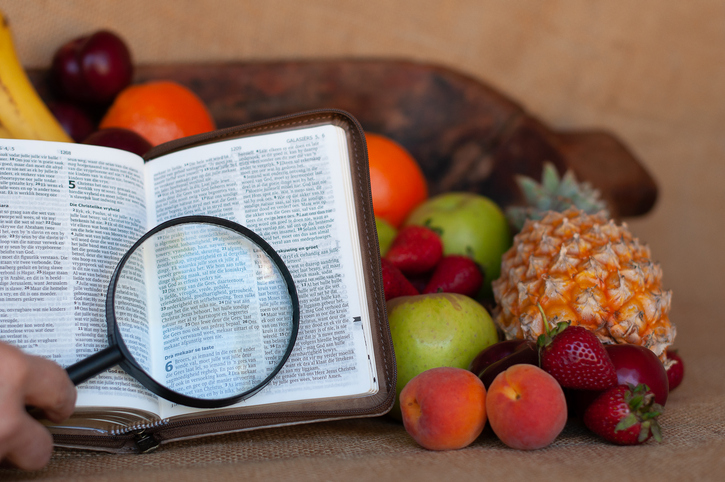
We see the fruits of the Spirit in true prophets. Like Moses, Paul, and Peter, they may have character flaws and weaknesses, and make mistakes like the rest of us, but their lives are on a steady path of growing closer to God. They are committed to the lifestyle and principles of God’s kingdom.
Not only that, but true prophets bear fruit in the people who hear their messages. The fruits of others impacted by their ministry may also be counted as evidence that their words are from God.
Even though God’s prophets are rejected and severely mistreated, they don’t seem to let it affect their genuine love for God or for His people (even for the ones who persecute them).
Verses for reflection and discussion:
Matthew 7:15-20
- How does Jesus advise us to test the prophets?
Acts 15:36-39 and Galatians 2:11-14
- What mistakes and weaknesses were shown by Paul, Barnabas, and Peter?
- What do their unlovely actions tell us about the fruits of a prophet and the effect it can have on their ministry?
Thursday: Fulfilled Prophecies
Looking for whether predictions come true is one of several tests of a true prophet. Along with their harmony with the Scriptures, their uplifting of Christ, and the fruits of the Spirit evident in their ministry, we can rightfully expect that prophecies will be fulfilled accurately if a prophet is from God.
One element to be aware of though is the fact that there are conditional prophecies, based on the choices made by those involved. A prominent example of this was what happened in the story of Jonah. God’s prophet was disappointed that Nineveh hadn’t been destroyed as he had foretold in his preaching. What he failed to recognize was that the prediction was dependent on whether Nineveh repented.
Fulfilled prophecies are certainly worth noting as one of the tests of a prophet. Thankfully, prophets often provide us with encouragement and counsel as we wait anxiously for the foretold event.
Verses for reflection and discussion:
Jeremiah 28:9 and Deuteronomy 18:22
- Why should we expect to see prophecies fulfilled in order to believe a prophet is from God?
Jonah 3:4, 10
- How can we know if a prophecy is conditional or not?
Friday: “Taste and See”
Ever since Ellen G. White received her first vision in December 1844, there have been those who question her prophetic gift. It helps to remember though that the Bible supports the presence of prophets in the last days. See Acts 2:17 and Revelation 19:10. It makes sense to taste and see if Ellen G. White might have the gift of prophecy.
Other arguments in support of her gift include the supernatural nature of some of her visions. There were witnesses that she had extraordinary strength when God was speaking to her. She was apparently without breath and unconscious of her surroundings. She spoke of circumstances that were unknown to her any other way, and many times she revealed future events that happened just as she foretold.
Her ability to unify believers, drawing them to Christ, positively influenced the lives of many people. and is certainly evidence of her prophetic gift as well. God instructed her to write down what God placed on her heart and her published works, translated into many languages, have caused countless people to turn their lives over to God.
Her Conflict of the Ages series and Steps to Christ should definitely be on our reading list. These books continue to help us understand the plan of salvation and draw us to the Scriptures and to a closer walk with God.
Next Week: Prophetic Authority and Relevance
To read the Sabbath School Lesson Quarterly and see more resources for its study, go to
