













Besides people and places reminding us of our Savior, the events themselves that happened to people at these places provide us with insights into the plan of salvation.
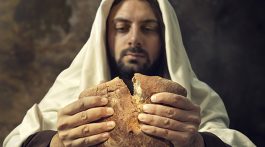
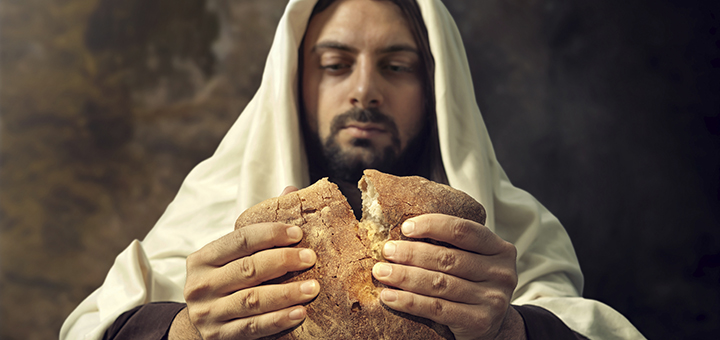
One of the first events we might consider was when food seemed to rain down on the Israelites during their 40-year-long sojourn in the wilderness. This “bread from heaven” (Exodus 16:4) or “bread of heaven” (Psalm 78:24), as it was called, was the manna that fed them faithfully during their wanderings before entering Canaan.
I wonder how many in the multitudes that Jesus fed during His earthly ministry remembered the small, flat loaves of bread that were made from the manna that had fallen from the sky for forty years. Feeding thousands on just a few loaves must have surely felt like receiving “bread from heaven” all over again. It was so miraculous that all four Gospel writers recorded it. See Matthew 14:13–21, Mark 6:30–44, Luke 9:10–17, and John 6:1–14. And yet, many of us may not have connected the two events.
Let’s remember that Jesus called Himself the Bread of Life (John 6:35), explaining that if we come to Him, we will never be hungry. No wonder there was a table of twelve loaves of bread in the sanctuary, called the table of bread of the Presence, indicating that God was present and was the host of His dwelling place, feeding all those who come to Him.
Another event you may not have noticed was how many times something happened at a well or a spring of water in the Old Testament. Two that most likely come to mind was the well where Abraham’s servant met Isaac’s future wife, Rebekah. And later at a well, Rebekah’s son Jacob met his future wife, Rachel. This, of course, causes us to reflect on how Jesus approached a Samaritan woman at a well, revealing to her that He was the Living Water that would keep her from ever being thirsty again. Being “married” to Jesus is the most satisfying, everlasting event of our lives. We, the church, are His Bride.
How glorious it will to eat and drink someday at the marriage supper of the Lamb (Revelation 19:7). Jesus must be longing for this event too. John records His first miracle was at a wedding in Cana (John 2:1-11).
Another name for Jesus is the Light of the World. We need food, we need water; but evidently we need light most of all. At creation, light was created on the first day. Without it, nothing else could survive. Light dispels darkness, so God’s word is said to be a lamp to our feet and a light to our path (Psalm 119:105). Yes, Jesus is the Word and the true Light that lights up our spiritual darkness (John 1:4-5). It’s reasonable to expect a seven-branched, golden lampstand in the sanctuary to remind us to let our light shine for Jesus.
How incredible it is when we receive God’s Light and allow Him to shine through us (Matthew 5:16). We aren’t called to be water or food for others, but we can reflect His light and lead others to God, who offers to be our everlasting source of spiritual bread and water.
How thankful we should be that His bread and water are guaranteed (Isaiah 33:16). With Jesus, the Good Shepherd (John 10:11), we need not be spiritually hungry or thirsty ever again (Psalm 23:1).
For Part 2 of Types of Christ, go to https://outlookmag.org/types-of-christ-2/
