


Adventist News
-
 With OneVoice Sharing the Hope of All Things New NAD-wide local church social media campaign
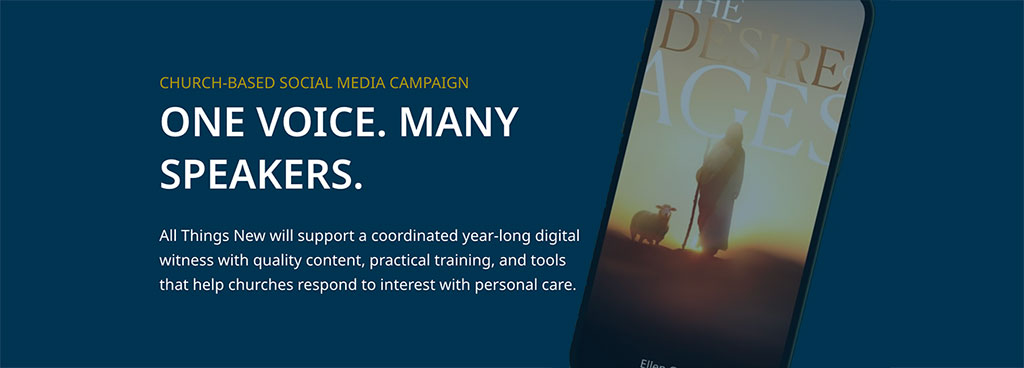
– October 17, 2026Local churches are invited to join a North America-wide social media campaign to share Jesus throughout 2027. What could happen if thousands of Seventh-day Adventist churches across North America used their social media platforms to share one message about Jesus? That’s the idea behind OneVoice27 and All Things New, a movement calling Adventists to come together and share the hope found in Jesus. Now, local churches have an opportunity to take part. The North American Division (NAD) is inviting churches to register for the All Things New social media campaign, a yearlong effort in 2027 to reach people with messages about Jesus. Participating churches will receive free, ready-to-share social media content created by the NAD and churches across North America. Content will be provided on a set schedule, allowing churches of all sizes to take part in a united effort. OneVoice27 reminds us that we have a shared mission. All Things New gives us a message to share. And this campaign gives every church a way to use its voice. Churches can register now at: https://nadadventist.typeform.com/allthingsnew How the Campaign Works Throughout 2027, participating churches will receive social media content, including graphics, carousels (posts with several slides), short videos called reels, and stories. The NAD plans to provide more than 200 pieces of content throughout the year. Churches can share these materials on their own social media pages without having to create everything themselves. Participating churches and organizations will be invited to share the same basic content on the same day, at a specific time in their local time zones. Materials will be available in English, Spanish, and French. The goal is to help churches share a clear, welcoming message about Jesus with people in their communities, including those who may not attend church. Your Role Different unions across the North American Division will help develop content in coordination with local churches during assigned months. September 2027 is Mid-America Union’s month. Churches within the Mid-America Union territory—Central States, Dakota, Iowa-Missouri, Kansas-Nebraska, Minnesota, and Rocky Mountain—will have an opportunity to help create content that can be shared across North America. The Mid-America territory is scheduled to provide 14 pieces of content: four static posts, three carousels, four reels, and three stories. September’s theme is Jesus’ Baptism and Commitment. We also hope to identify local church members who enjoy photography, writing, video, graphic design, or social media and invite them to use their talents in this effort. Training and Support for Churches Churches do not need a professional communication team to participate. The NAD is planning online training to help church members improve their social media skills. Topics include using Facebook and Instagram, creating content, planning posts, responding to messages, and boosting posts to reach more people. These skills can help churches strengthen their communication long after the campaign ends. For Mid-America, this also supports a larger goal: building a stronger network of local church communicators who can share stories of faith and ministry in their communities. More Than a Social Media Campaign All Things New is about more than posting graphics and videos. It is an invitation to pray like Jesus, serve like Jesus, share Jesus, and help others follow Jesus. Social media gives churches another way to reach people who may never walk through their doors. A simple post could encourage someone, start a conversation, or help a person connect with a local church. One voice. Many churches. One mission: Jesus. Through OneVoice27, we have an opportunity to work together. Through All Things New, we can share the hope Jesus brings to our lives and communities. Whether your church has an active social media team or is just getting started, there is a place for you in this effort. Learn more about All Things New: https://allthingsnew2027.com/ Register your church for the 2027 social media campaign: https://nadadventist.typeform.com/allthingsnew?typeform-source=allthingsnew2027.com Together, let’s use our voices to share Jesus.
-
 Montrose Maranatha Hispanic Church Dedicates New Chapel
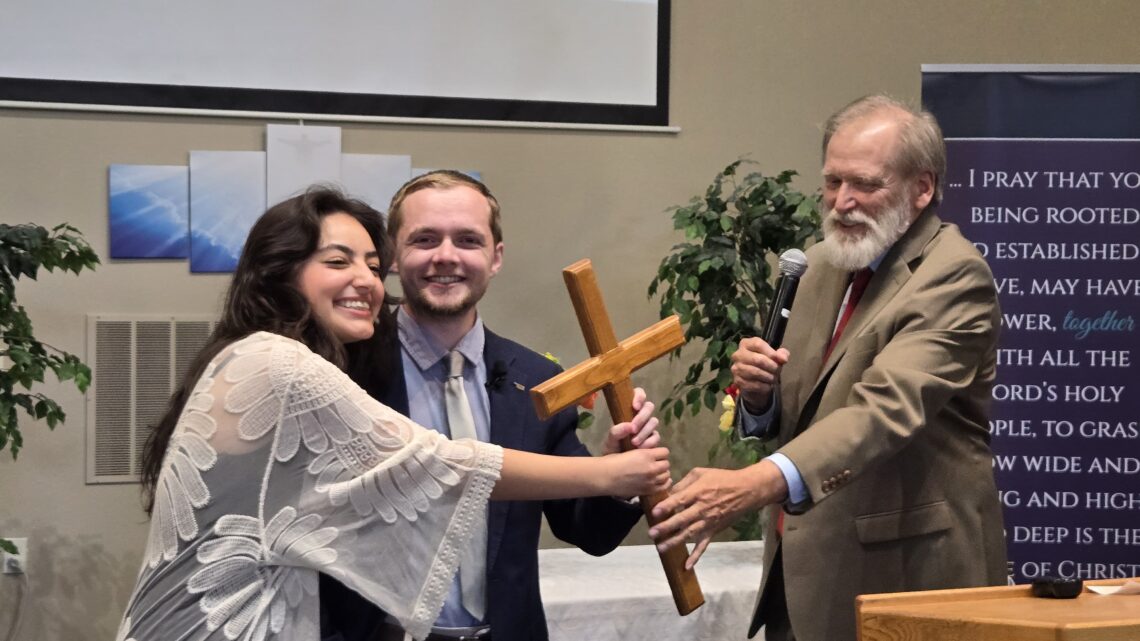
– October 6, 2026The Maranatha Hispanic Church in Montrose, Colorado, celebrated the official dedication of its new chapel in July with a special worship service centered on gratitude, worship and renewed commitment to God’s mission. Hugo Guillén, pastor and Rocky Mountain Conference ministerial associate director and lead for multicultural ministries, preached the dedication sermon and led a meaningful service of consecration alongside Daniele Fantoni, Maranatha Church’s lead pastor, and the church elders. The celebration marked the culmination of a journey that began in January 2013, when a small Hispanic group first met in a borrowed classroom at the Montrose Adventist Church under the leadership of church member Abimael Chávez and with the support of RMC pastor Michael Shannon. The congregation was officially organized as a church in June 2021. “In October 2022, God opened an unexpected door when the Montrose Seventh-day Adventist Church voted unanimously to donate its former school property to the Hispanic congregation,” remarked Fantoni. “After years of renovation, volunteer labor, generous support, and God’s faithful provision, the church joyfully dedicated its new chapel.” He continued, “Throughout its history, God has blessed the congregation with more than 30 baptisms, evangelistic meetings, youth ministries, and steady spiritual growth. One of the church’s defining passions has been its commitment to young people, expressed in its motto: None of our young people will be lost to the world; all for Christ.” The dedication service celebrated not only God’s faithfulness in the past but also the church’s commitment for the future. Those gathered dedicated themselves anew to worship God, grow as disciples, and proclaim the gospel until Christ returns—the very words now engraved on the church’s dedication plaque as a lasting reminder of its mission. Daniele Fantoni is associate pastor for the Grand Junction District in Colorado.
-
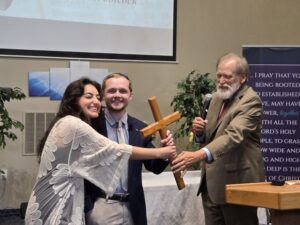 Called Together Arnetts Begin Ministry in Fargo and Wahpeton
– October 6, 2026Pastor Payton and Albany Arnett found a love for theology—and for each other—while attending Union Adventist University. Today, Pastor Payton serves the Fargo/Wahpeton church district, while Albany serves as the Fargo area Bible worker. Together, they are beginning their first ministry assignment in North Dakota. Payton grew up in Bonney Lake, Washington, and attended Auburn Adventist Academy, where the chaplains provided opportunities for him to serve in ministry. “This experience first made me realize the gifts God had given me,” he said. “I’m in love with apologetics and the truth of the gospel. Reflecting on God’s leading, Payton shared, “God clearly led us to the Dakotas. I see more and more how good the fit is here. I’m continually surprised by God’s grace and leading in my life. North Dakota was not initially on my radar, but I’m glad God had other plans.” Albany was born in Venezuela and grew up in various parts of the United States while her father served as a pastor. “I first felt the calling to ministry as I grew in my personal relationship with God and discovered a love for studying the Bible,” she said. As she became more involved in church ministries, Albany was given the opportunity to preach while in high school. “I discovered my love for preaching. All of this drew me to fall in love not only with the Lord but with ministry. In Union Adventist University’s theology program, where Payton and I met, this passion solidified into a confidence that God has called me to ministry. Payton and I are in the Dakotas because of God’s leading, serving in a place where we can minister together for His kingdom.” The Dakota Conference is grateful God has led Payton and Albany to serve in the Dakotas. We look forward to seeing how He will continue to bless their ministry and the churches they serve. Information compiled by Elder Darrel Lindensmith, Dakota Conference ministerial director and Adventist Campus Ministries director.
-
 Edwin Bravatti Ordained in Garden City
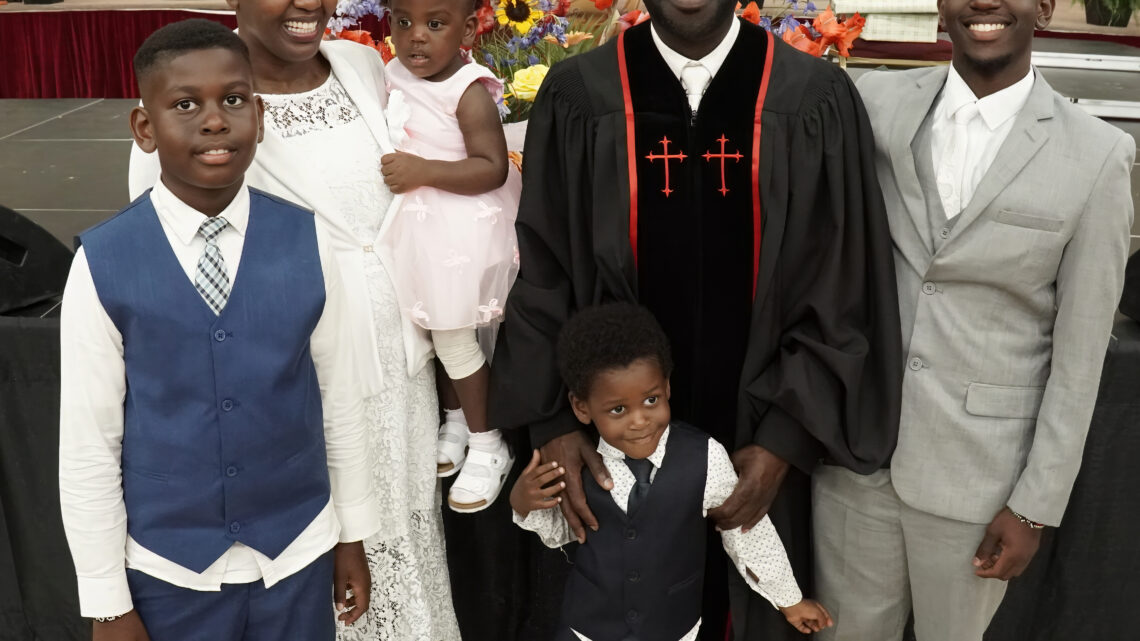
– October 6, 2026Edwin Bravatti, pastor of the Garden City District, was ordained to the gospel ministry Aug. 8 at the Garden City Church in Garden City, Kansas. The service recognized a call to ministry that Bravatti first sensed at an early age and has followed through media evangelism, pastoral work and service in the local church. Conference president Ron Carlson welcomed those gathered and joined Kansas-Nebraska Conference ministerial director Virgil Covel in presenting Bravatti for ordination. James Ayers gave a message titled “Clay Pots,” followed by the ordination prayer and charge. Covel called Bravatti to serve as a servant, shepherd, spiritual watchman and teacher, while keeping his own relationship with Christ at the center of his ministry. “It was a beautiful ordination service filled with music,” Covel said. He noted the participation of Bravatti, his daughters and son-in-law, and said he is thankful for Bravatti’s journey and looks forward to his continued work in ministry. Bravatti’s call has taken him through several forms of ministry. At 16, while working with The Voice of Prophecy, he was ordained as an elder by H.M.S. Richards. He later studied business administration at California Lutheran University and cinematography at Pierce College in Los Angeles. His training and work in the film industry became tools for media evangelism through The Voice of Prophecy, It Is Written and La Voz de la Esperanza. Bravatti entered pastoral ministry in Scottsbluff, Nebraska, in 2019. During the next six years, he also volunteered as a chaplain at Regional West Medical Center, offering spiritual care to patients, families and staff. He completed a Master of Pastoral Ministry degree from Andrews University in December 2025 and now pastors the Garden City District. Music has also been an important part of Bravatti’s ministry. As a member of the vocal ensemble Opus 7, he has performed around the world, including at the Vatican and the 1995 General Conference Session in Utrecht, Netherlands. That part of his story was present at the ordination service as Edwin, Chantelle and Lauren Bravatti sang “The Prayer.” Bravatti and Ayers later performed “Great Is Thy Faithfulness.” After Bravatti responded to the ordination charge, Carlson welcomed him to the ministry and Sue Carlson welcomed his spouse. The congregation closed the service by singing “I’ll Go Where You Want Me to Go,” the same commitment that has shaped Bravatti’s path from media evangelism to pastoral ministry.
Blogs
-
 Healthy Lifestyle Do This A Must Do To Live Healthy
– October 26, 2026https://youtube.com/shorts/gQPqX-3Njdw?si=iVgZ1rRxMogC_TFG
-
 The Testimony We Were Supposed to Give Glass Children — Part 9
– October 24, 2026The only one who said yes When I was at Union College, Dr. Friedline asked me to speak in chapel about my brother. He was a kind man with a disability himself, and had lived and done well with his challenges. He wanted to put people with disabilities in front of the student body in some way. I learned later he had asked a couple of other students I was friends with if they would speak about their brothers too. I was the only one who said yes. The others were not willing to talk about it publicly. I did not think much of that at the time. I have thought about it a great deal since. What I was going to say Then I had to decide what I would actually say, and I discovered I did not know. I had been telling the protective version my whole life. We were blessed. He was really just like everybody else. God had been so good to our family. I could deliver that version in my sleep, and every word of it was defensible, and all of it left out the part where I lived. But I was twenty years old, and I had just begun to understand how abnormal my childhood had been. I was starting to become a person with her own account of things. At the same moment I was being handed a microphone and a huge sanctuary full of students and staff. I grew more and more uncomfortable as the day got closer, and did not understand. I know now. What I was planning to say was true. But it was not the whole truth. I knew no one would expect the “truth” I could say. It would be “too true.” Dr. Friedline never told me what to say. He never hinted, never steered, never suggested a theme. Nobody had to. The expectation was simply in the air, the way it always is. Many years later More than a decade later, a friend asked me to speak at a Saturday evening vespers — this time alongside Rick. I would be translating for him as he told his story and also telling mine. By that point, he had lived in my home with my family for a time and finally moved into an apartment of his own. I thought about it for a long time before I said yes. And I promised myself this time I would tell some of the truth. So I did. I gave the good parts and some of the hard parts. I said plainly how much I love him, because I do. And I put in a few pieces of what it actually costs the family of a person with a disability. A great many people in that sanctuary knew me. Afterward, two or three came up to me and said they had not realized it had been so hard. I had barely scratched the surface. Walking out of that building, what I felt was guilt — that I might have said too much. Why we do not talk about this I think our society wants adversity to look like a movie. Difficulties arise, difficulties are overcome, the family is strengthened, the ending is happy, and the whole thing is uplifting. I think the church wants this version even more than the world does. Real life is not like that. Sometimes it is simply hard. There were blessings and miracles. God plainly worked things out for our family so many times. But blessings do not cancel hardship. Both of them were true, the entire time, in the same house. That is why this has been such a difficult topic for me to write about. In the 9 years I have been blogging for Outlook Magazine, I have sat down repeatedly to write about my experiences. But I could not. Not because the story is shameful. Because it is not all positive and happy. Not sent, but not wasted I do not believe God gives us hard times so that we can help other people. Satan is the cause of the evil in this world. However, scripture does tell us what we have been through can be used afterward. Blessed be the God and Father of our Lord Jesus Christ, the Father of mercies and God of all comfort, who comforts us in all our tribulation, that we may be able to comfort those who are in any trouble, with the comfort with which we ourselves are comforted by God. (2 Corinthians 1:3-4, NKJV) There is a concept in my field that does not get discussed nearly enough: Post-traumatic Growth. Researchers have found after some difficult life events, people often begin to see life differently, develop new ways of meeting hard things, and experience real psychological growth. Paul got there first. We also glory in tribulations, knowing that tribulation produces perseverance; and perseverance, character; and character, hope. (Romans 5:3-4, NKJV) So God does not send the hard thing. He has built us to grow through it, and He does not waste what we learned there. Which means telling the honest version is not disloyalty and it is not ingratitude. It is the comfort being passed along. My hope is that someone who has never felt seen, will read this and know they are not the only one. That is not me breaking a rule. That is the instruction. Lord, You have never needed us to make it sound better than it was. Give us the nerve to tell the truth about our lives, and give the people who hear it the grace to stay in the room. Amen. Next time: the feeling I could not explain, and the plan I gave up because of it. See the FIRST in the series HERE
-
 The Teacher’s Notes–Revelation and Inspiration, Lesson 5 Adult Bible Study Guide, 2026 4Q, "The Gift of Prophecy"
– October 24, 2026Sabbath School Lesson for October 24-30, 2026 Introduction to Lesson 5, Revelation and Inspiration Memory Text: “The Revelation of Jesus Christ, which God gave Him to show His servants–things which must shortly take place. And He sent and signified it by His angel to His servant John, who bore witness to the word of God, and to the testimony of Jesus Christ, to all things he saw” Revelation 1:1, 2 NKJV The first two verses of Revelation describe the delivery chain of those who enabled John to receive and transmit messages from God. The messages came from God the Father, to Jesus Christ, to an angel, to the appointed prophet, and finally to the readers and hearers of the message. It’s important to know how God manifests Himself to humans through the process of revelation, and then inspires the prophets with ways to share His message. Both revelation and inspiration are necessary for God’s plan of salvation to reach all of us. We know John to be one of the twelve apostles who was very close to Jesus. After Christ was gone from their midst, John continued ministering in Jerusalem, and later moved to a church in Ephesus in the Roman province of Asia Minor. Roman Emperor Domitian persecuted Christians there, resulting in John’s banishment to the island of Patmos, a remote, sparsely-populated place where John received a number of revelations from God. This week, we’ll explore: Sunday: General and Special Revelation Monday: The Process of Inspiration Tuesday: Oral Messages Wednesday: Written Messages Thursday: Drama, Symbols, Parables Friday: Ellen G. White on Revelation and Inspiration Sunday: General and Special Revelation Before Adam and Eve sinned, God was clearly seen and understood through the natural beauty of the world around them. God walked and talked with them directly in the Garden, and they easily felt His infinite power and love in such a peaceful, perfect environment. This revelation of Himself is known today as general revelation. Even after sin marred our natural world, we get glimpses of God’s healing, caring attributes by observing nature. It’s been necessary, however, to supplement the ambiguous revelation of nature, marred as it has been with evil, with special manifestations of God. Through Scripture and Jesus’ own life and ministry, we can more fully understand the way God wants to save us from the evil that now surrounds us. Verses for reflection and discussion: Psalm 19:1 and Romans 1:20 What can we still know about God through the general revelation given to us through nature? Matthew 13:24-30 What can we learn from the parable of the wheat and the tares? How has sin changed our natural world, making it necessary for special revelations from God? Hebrews 1:1-2, John 5:39, and John 1:14 In what two ways has God reached out to communicate with us with special revelations? What’s the difference between the word of God and Jesus, the Word made flesh? Monday: The Process of Inspiration Prophets received messages from God in various ways, which included: visions and dreams (Numbers 12:6), eyewitnesses (1 John 1:1-3), and divine impressions on the mind (2 Peter 1:21). Other chosen ways to make His will known to ancient Israel were through the casting of lots and the Urim and Thummim worn by the high priest. Much of God’s communication with mankind has been preserved in the Holy Scriptures. The Bible is meant to be our source of doctrine, and is useful for instruction, correction, and to make us wise. See 2 Timothy 3:15,16. Other inspirational ways of getting God’s messages out to the people besides writing them down, were to preach them and sometimes act them out. Both Hosea (Hosea 1:2) and Ezekiel (Ezekiel 4:1-8), for example, were told to dramatize their messages in such a way that made them obvious and memorable. Verses for reflection and discussion: 2 Timothy 3:15-17 and James 1:17 How are we to use the Bible? Why can we trust the Bible record? What makes it so trustworthy? Tuesday: Oral Messages Some prophets heard God speak audibly, including Moses, Isaiah, Jeremiah, and Ezekiel. How comforting to know that when God speaks this way, just as He did with Adam and Eve in the Garden, there is no miscommunication or deception possible on God’s part. His messaging is totally clear and reliable. As we know, there were several prophets who did not preserve God’s messages in written form, as some had been instructed to do. But they were fully committed to sharing them orally. Their spoken word also reached many people. Of course, Noah comes to mind, as a preacher of righteousness who faithfully warned for years about the coming flood. Other noncanonical prophets whose words are not found in the Bible are Nathan, Elijah, Elisha, and John the Baptist. Even Jesus of Nazareth taught and preached orally during His earthly ministry. And it was said that He did so “as one having authority” (Matthew 7:29). Verses for reflection and discussion: 2 Peter 1:19-21 How did the Bible come to be written? How does Bible study bless us and how does it help our relationship with God? Wednesday: Written Messages God told certain prophets to record the messages given to them. These written messages were helpful in making God’s revelations permanent and available to more people. Moses, for example, was told to write things “for a memorial” (Exodus 17:14). This prophet thankfully provided us with the first five books of the Bible, Psalm 90, and the book of Job. Roughly 30-40 other authors have contributed to the 66-book Holy Bible as we know it today. It was written over a 1,500-year timespan, in three languages, from three continents: Asia, Europe, and Africa. Amazingly, although they wrote in their own style, often expressing their personal reactions, we find a harmonizing thread throughout its pages, showing us who God is and what His plans are for us. Some parts of the Bible are more relevant to us now, but all the Scriptures deserve our attention, because they point to <a class="cat-post-excerpt-more" href="https://www.outlookmag.org/the-teachers-notes-revelation-and-inspiration-lesson-5/" title="Continue reading The Teacher’s Notes–Revelation and Inspiration, Lesson 5 Adult Bible Study Guide, 2026 4Q, “The Gift of Prophecy”“>Read more…
-
 What Genealogies Tell Us "Fourteen"
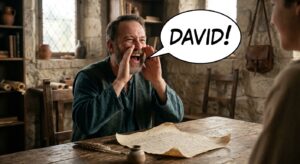
– October 21, 2026So all the generations from Abraham to David are fourteen generations; from David to the deportation to Babylon, fourteen generations; and from the deportation to Babylon to the Messiah, fourteen generations. Fourteen generations. Wait, what? Fourteen? Apparently, that’s supposed to mean something. I have no idea how many times I read that and passed right over it. But once I started asking my two questions, I stopped cold. “Why did Matthew tell us this?” Clearly, the number fourteen means something to him, something he thinks will help convince his audience that Jesus truly is “the Messiah, the son of David, the son of Abraham.” But what? Matthew tells us it was 14 generations from Abraham to David 14 generations from David to the exile, and then 14 generations from the exile to Jesus. I always wondered why? In the Bible 7 is an important number. 6 has its own significance 12 and 40 also have importance. But 14? Why 14? Yes, it’s 2 x 7, but in what other way would that number be important? It was only when I studied 1st century Judaism carefully that I realized why the number 14 mattered In our culture, we are familiar with Roman numerals. In that system, “I” stands for one, “V” stands for five, “X” stands for 10 and so on. The Romans were not the only people who had a numbering system based on their alphabet. In fact, so did the Jews. And it was especially popular at the time Matthew wrote his gospel. What does this have to do with “fourteen?” To understand that, let’s go back to how Matthew started his gospel. The record of the genealogy of Jesus the Messiah, the son of David, the son of Abraham. Matthew assigns three specific things to Jesus. 1) He is the Messiah, 2) He is the son of David, and 3) He is the descendant of Abraham. So far, the genealogy has firmly established 2 and 3, his descent from David and Abraham. But, the skeptical reader might ask, why is Jesus, why is this particular descendant of Abraham and David the Messiah? Biblical Hebrew only has consonants. What linguists call “vowel pointings” were added to the ancient texts by Jewish scholars beginning nearly 600 years after Christ. So the name “David” in Hebrew contained three consonants which we transliterate as “DVD.” And here’s where Jewish numerology comes in. Daleth=D, is the fourth letter in the Hebrew alphabet. “Vav” = V, is the sixth letter. So “David” = 4+6+4. Fourteen. So Matthew wants his readers to see it is DVD generations from Abraham to DVD, DVD generations from DVD to the exile, and DVD generations from the exile to Jesus. Look what happens when you see “DVD” as “David.” David generations from Abraham to David, David generations from David to the exile, and David generations from the exile to Jesus. Read that way, the genealogy fairly shouts that Jesus is the new David! I didn’t see it, because I read it with 21st century American eyes. But to anyone reading it with 1st century Jewish eyes, especially one inquiring into Jesus’ Messiahship—precisely Matthew’s target audience—it is virtually unmistakable. Genealogies in the Bible may seem boring and uneventful. Some even argue about their accuracy. That’s because we aren’t attuned to how they tell stories. Scripture features about 25 genealogies, most of which we read as dry lists of obscure, often almost unpronounceable names. Now we know that each one tells a story that the biblical author wants us to know. I’ll never see them the same way again. What about you?
Featured Stories
-
 Pastors and Teachers Reunite in Branson
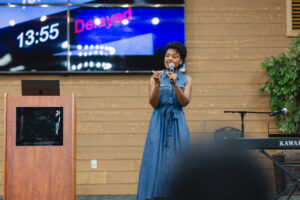
– October 8, 2026About 250 Kansas-Nebraska Conference pastors, teachers and family members gathered last August at Westgate Branson Woods Resort in Branson, Missouri, for their first joint retreat since 2019. Held under the theme Building God’s Kingdom Together, the event brought two groups with different daily roles together around a shared mission. That sense of togetherness began on the very first evening. When the piano failed on opening night, guest musician Gale Jones Murphy led worship a cappella. Her personality, energy and connection with the room quickly drew people into singing. Once a keyboard was available for the remaining meetings, Murphy continued using creative icebreaker songs to invite participation before moving into worship. Many conference pastors serve districts that include an Adventist school. The retreat gave pastors and teachers time to see how their work connects. Education may be a different field, but it remains another arm of pastoral ministry. Their roles are different, while their purpose of helping people know Christ is the same. Morning worships were led by Greg King, dean of the School of Religion at Southern Adventist University. In the evenings, Lola Moore Johnston preached from the book of Nehemiah. In one message, she focused on Nehemiah’s response when he learned that Jerusalem remained in ruins. Although the destruction did not threaten his own livelihood, the news left him distressed. Johnston challenged listeners to care about needs even when the problem does not affect them personally. Pastors and teachers also met separately for professional development. Alicia Patterson, a grief coach and educator, led the pastoral sessions on grief, listening and resilience. Jeff Bovee, Kansas-Nebraska Conference education superintendent, worked with teachers through review, discussion and group activities. The teacher breakouts focused on assessing learning in the standards-based classroom. Educators met in professional learning communities organized by grade bands and secondary subject areas to explore how classroom assessments can more effectively guide instruction. Schools also had time to work through their individual pre-session agendas in preparation for the new academic year. “The education breakout was a relaxed professional development time where teachers had an opportunity to meet in person with their professional learning communities and delve deeper into learning how to most effectively use classroom assessments to drive instruction in their classrooms,” said Bovee. “We ended our last breakout of the retreat with a challenge for the new school year to ensure that all students know they are loved and valued and God has a plan for their lives.” Afternoons gave families and friends time to enjoy Branson together. Participants visited local attractions, shared meals and spent time with people they may not often see during the year. By the final evening, Murphy’s opening song had become a family affair. She invited children to the front to lead “I’m In Right, Out Right, Up Right, Down Right,” drawing the room into the motions. The moment captured what the retreat had been designed to do: bring pastors, teachers and their families into the same room as one ministry team.
-
 Hope Beyond the Diagnosis Christian Record Services is helping people facing vision loss discover they are not alone—and God still has a purpose for their lives.
– October 8, 2026Imagine sitting in an eye doctor’s office and hearing words that change your life forever. “You have an irreversible eye disease.” “You’re losing your sight.” “There’s nothing more we can do.” For many people, that moment marks the beginning of fear, isolation and uncertainty. Questions about work, independence and the future quickly replace confidence with anxiety. But Dr. Dexter Thomas, president of Christian Record Services, also sees it as the moment when the church has an opportunity to share something medicine cannot provide—hope. “Faith gives people a new story,” Thomas said during a recent conversation with OUTLOOK. “God isn’t finished with me. He still has work for me. I am still His child.” That conviction is at the heart of Christian Record Services, a ministry that has served people who are blind or experiencing vision loss since 1899. Through free Braille, large-print and audio Christian resources, summer camps, and a nationwide ministry known as PhoneFaith, the organization helps individuals remain connected to Scripture, community and the hope found in Jesus Christ. For Thomas, the ministry’s mission is deeply personal. Growing up legally blind, he remembers what it was like to long for access to God’s Word. Christian Record Services provided him with the Bible in Braille and on audio recordings—resources that ultimately helped shape his calling to ministry. “I believe it led to me becoming a pastor,” he said. Today, Thomas serves as the first blind president in 100 years, a role that allows him to encourage others facing many of the same fears he once experienced. One of the ministry’s newest initiatives addresses what Thomas calls the “Quiet Crisis.” More than eight million Americans are living with irreversible eye diseases. Too often, after receiving a diagnosis, patients leave their doctor’s office with little more than medical information. Christian Record Services is working to change that by placing ministry resources directly into eye care clinics across North America. The goal is simple: become the first voice people hear after receiving life-changing news. Instead of hearing only what they have lost, individuals discover there is still hope, purpose and a community ready to walk beside them. That hope extends far beyond printed resources. Christian Record Services hosts camps where children and adults who are blind or have low vision experience activities many never imagined possible—from horseback riding and canoeing to forming lifelong friendships. PhoneFaith connects participants across the country through Bible studies, prayer groups, health programs and fellowship—helping combat the loneliness that often accompanies vision loss. New opportunities Technology has also opened remarkable new doors. Thomas carries hundreds of Braille books on a single digital device, using wearable technology like Ray-Ban Meta smart glasses with the Be My Eyes app to navigate airports independently, and participating in ministry through tools that were unimaginable just a few years ago. “Technology has really blown the door open,” he said. “It’s made life so much easier.” While accessibility is important, Thomas believes belonging is even more important. Too often, churches unintentionally see people with disabilities as recipients of ministry rather than participants in it. He challenges congregations to recognize that every believer has spiritual gifts to share. “Everybody is a contributor, designed and destined to do great things,” he said. He recalled introducing a blind church member to opportunities for ministry. That individual eventually became an elder, reminding the congregation that blindness was never a barrier to serving Christ. To watch the complete conversation with Dexter Thomas of Christian Record Services and Amanda Colgan of Three Angels Deaf Ministries, visit the OUTLOOK YouTube channel and watch From Disabilities to Possibilities | Stories of Faith, Access & Belonging. The discussion explores how churches can remove barriers, create belonging and ensure that every person has an opportunity to experience the love of Christ. To learn more about Christian Record Services or support its ministry, visit christianrecord.org.
-
 Hawkeye Church Hosts Popular Fair Outreach
– October 6, 2026As fairgoers filled the grounds at the Fayette County Fair in Iowa last July, one stop continued a cherished tradition of community connection and practical ministry. The Hawkeye Church welcomed families to their annual photo booth, offering a warm space to create lasting memories and experience Christian fellowship. What began as a simple creative outreach has blossomed into an eagerly anticipated highlight of the fair. Designed to reflect the area’s rich agricultural roots, the booth features a rustic wooden barn adorned with stuffed farm animals. Children and parents alike enjoy climbing atop hay bales, ride-on toy tractors and horses for picture-perfect moments. The photo booth has become such a staple that many local families now make a point to visit annually, capturing milestone photos to track their children’s growth year after year. “Our photo booth is more than just taking pictures—it’s a simple, joyful way to show our community that we care,” said church members involved in organizing the event. While the photo booth provides families with a fun and tangible fair keepsake, the heart of the outreach is personal connection. Church volunteers use the opportunity to build friendships, offer free Christian literature, and share the love of Jesus with neighbors in a relaxed, welcoming environment. Adding to the excitement each year, the church partners with local radio station KRJE – “Radio for Jesus” on one day during the fair by blowing up and handing out punch balloons to children. The bright, cheerful balloons proved to be a massive draw, bringing smiles to young fairgoers as well as advertising the radio station throughout the fairgrounds. Through warm conversations, shared laughter, and simple acts of service, members of the Hawkeye Church continue to demonstrate their commitment to stepping outside church walls and serving as a positive, loving presence in Fayette County. Eileen Birth is communication leader for the Hawkeye Church in Iowa.
-
 Creative Ministries Lead to Joyful Connections in Minnesota
– October 6, 2026Minnesota Adventists are committed to making disciples who make more disciples. Since discipleship begins with relationships, church members around the state are working to form long-lasting connections with neighbors, visitors and young people. Teaching the youth to teach others Nobody is just an onlooker in Jose Luis Bello’s youth class and Pathfinder group. Along with other leaders at Northeast Hispanic Seventh-day Adventist Church (NESDA), he identifies talents and encourages teens to lead the younger children. His goal is to build a Christian community where all ages can experience camporees, outdoor challenges, and meaningful Bible study together. “So many youth now are lonely. They just stay home in their rooms without seeing each other,” Jose explains. “I refuse to accept that.” One way to build lasting faith is by equipping youth to witness. Recently Jose and a group of young men wore Bible costumes and acted out stories about Jesus during a children’s evangelistic weekend. And one youth member, Rachel, has accepted the task of teaching younger girls as they complete Pathfinder requirements. “Leaders need to do more than just talk, talk, talk,” she says. “If we just make rules, the girls will think no one cares about them. I need to be their friend.” Hosting the best party of the year It wouldn’t be Christmas in Hinckley, Minnesota, without the Community Christmas Program at the local Adventist church. More than 20 years ago the whole town was curious about the new church being built by member Terry Haavisto along I-35. “Can we see the inside?” people asked. Terry’s wife, Lori, and sister, Jodie, started by inviting community guests to a Christmas music program so everyone could view the new sanctuary. The first event was so successful that it’s become an anticipated annual tradition. The program is a true community effort. Neighbors and church groups are invited to perform, and no one is turned away, no matter how musically skilled. Members serve a free meal of spaghetti and Christmas cookies, and a free-will offering is collected for a worthy cause. As for advertising, they rely on word of mouth, plus posters in local businesses and ads on the church radio station. None of this could happen without the hard work of every church member, including the communication crew, parking crew, kitchen crew, set-up crew, and cleanup crew. Hinckley member Pamela Rodacker-Waye adds, “Most importantly, Jesus, as He’s the reason for everything we do here.” Last year a guest turned to a church member and commented, “I could see myself being part of a church like this.” That’s exactly why the program is still going 21 years later. Turning visitors into friends Two years ago Deborah Timasi first visited Kenyan Community Church, wondering what she was getting herself into. “Right away someone met me and showed me around and made me feel welcome,” she remembers. “It was the first five minutes that got me. If it wasn’t for that person, I wouldn’t have come back.” Now Deborah is a baptized church member and head of the Hospitality Committee that first welcomed her. Her team visits people in homes and hospitals, takes gifts to new mothers, and helps guests feel at home during potluck. She compares her ministry to that of the Good Samaritan. She says that people who find friends in church are more likely to stay and become followers of Jesus for a lifetime. Lighting up the dark with music More than 15 years ago, Mankato church member Jeff Buege faced a personal heartache and prayed for God to remove his sadness. Sensing a need to look outward, Jeff asked the Lord how he could serve others. Looking back, Jeff recalls, “Within three days, God provided the time, the resources, and the locations [for a new ministry]. What began in a moment of utter brokenness immediately became an inward healing for me.” As God opened unexpected doors, Jeff began singing and sharing the gospel at nursing homes throughout the Midwest. He encountered a deep thirst for the gospel and found that thousands in the closing chapters of their lives needed to be reminded how much Jesus loves them. “I truly didn’t know even mildly the direction God would lead me,” Jeff says. “Yet very quickly I understood His will and surrendered to His path.” Within two years he was doing 200 programs annually; by the tenth year it was over 800 programs. Jeff says the feedback has been “beyond words.” It’s not about fame but witnessing the love of Jesus reflected in the lives of grateful listeners. Always he relies on the strength of Jesus, who says, “I am the vine; you are the branches” (John 15:5). Passing on real-world skills Southview Pathfinder leader Lynnette Nyabuto noticed a pattern—some older teens were drifting away from the church when they outgrew Pathfinders. She wanted to keep them connected to their church family, while also creating space for teens who had never joined Pathfinders. Her plan: earlier this year she surveyed church members about what practical skills they could pass on to the next generation. Now all ages look forward to baking, painting, and fixing cars together. Lynnette says, “Once connections are established, the teens may be more open to other activities, including Bible studies—which is the ultimate goal.”