

-
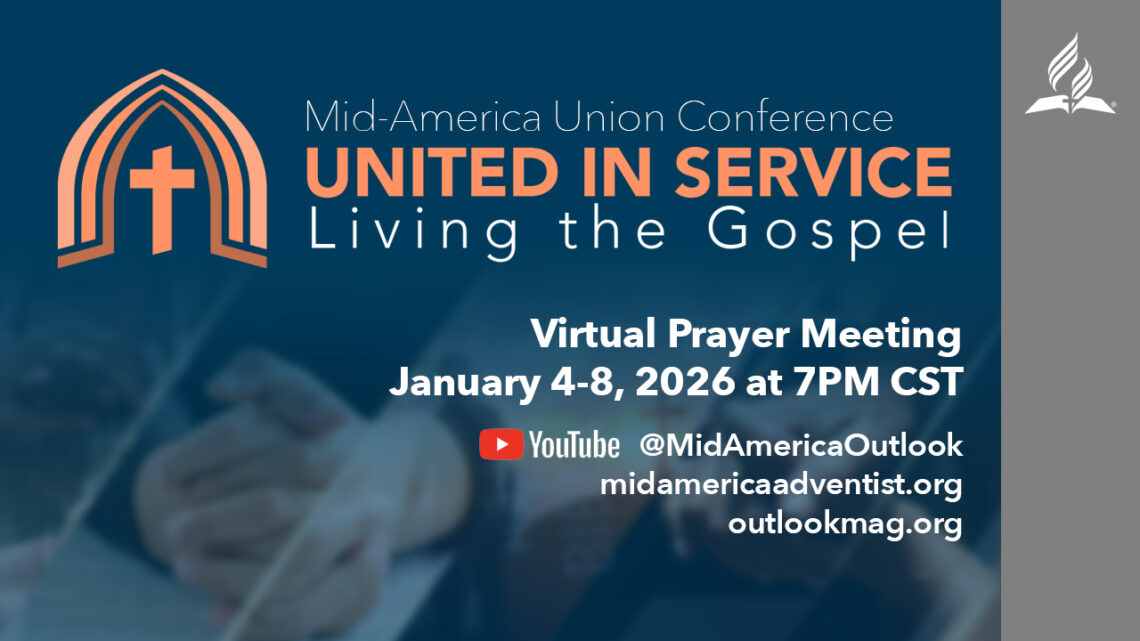
December 25, 2025 Virtual Week of Prayer Set for Jan. 4–8, 2026
Read more -
December 22, 2025 Adding SALT: It Is Written School of Evangelism Coming to Union Adventist University
Read more -

December 19, 2025 The Sabbath as Sign: Walking Billboards of Restoration “The Sabbath was to be a sign between God and His people forever.” The Story of Redemption, p. 141
Read more
Adventist News
 Church Leadership Summit Equips Minnesota Missionaries
– January 5, 2026
Church Leadership Summit Equips Minnesota Missionaries
– January 5, 2026
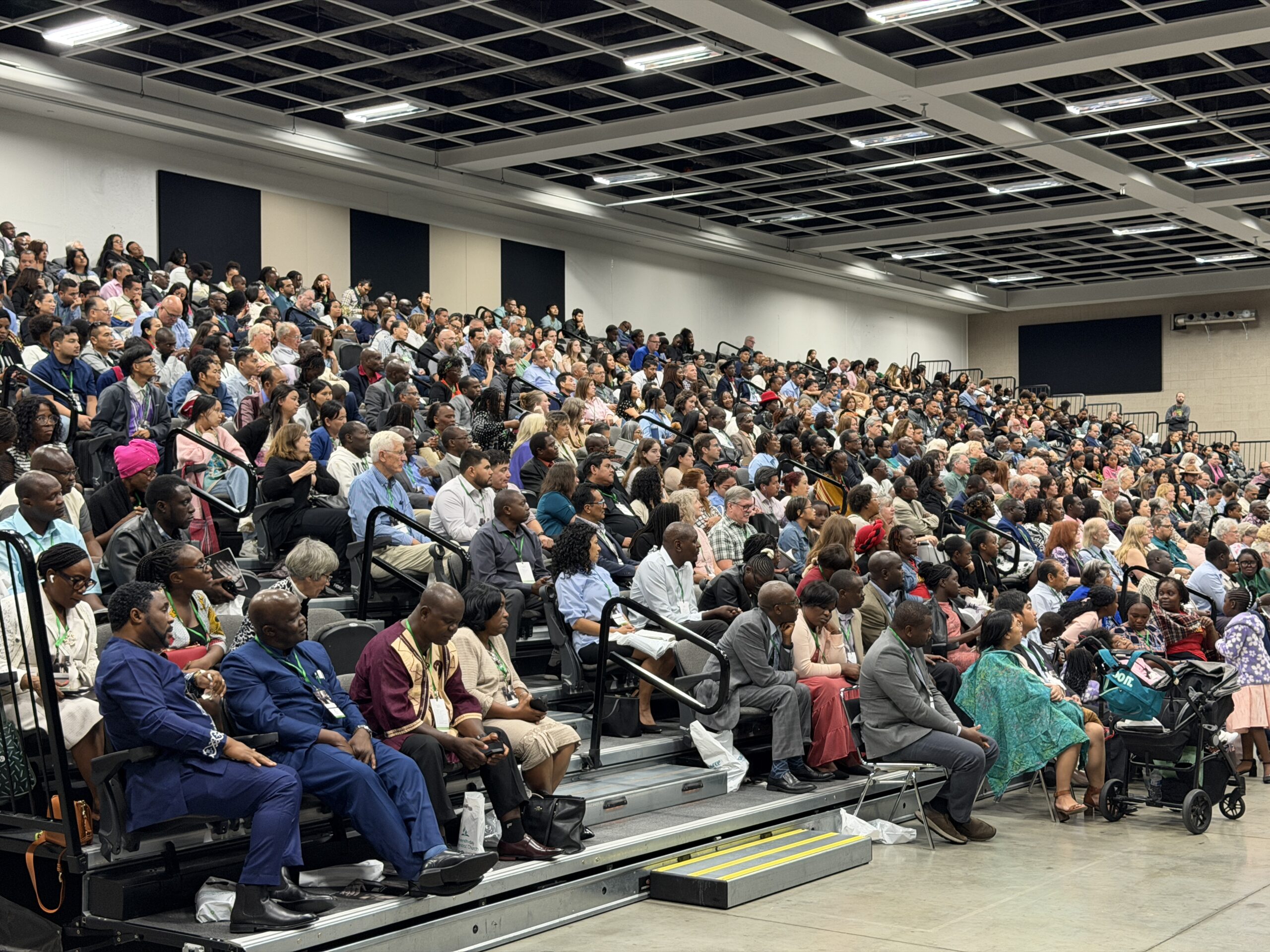
It was the calm before the chaos. At 6 am last October 4, I walked from my hotel room to the River’s Edge Convention Center show office, where my team would be gathering in 15 minutes to finish setting up for the Minnesota Conference’s Church Leadership Summit. I unlocked the door and turned on the lights. Our boxes of programs and giveaway bags sat open, ready for distribution. Name badges were lined up alphabetically, waiting for their owners to check in. Silence reigned. I took a deep breath. I had done the math. It looked like 725 people would be on site—the largest convention I had ever helped organize. I asked God to be with us. I prayed that He would inspire every heart and intervene where needed: in travel plans, illness, technology and speech. As the conference office team gathered in the show office, an exterior door banged open, and the chaos of the day began. The day was a blur of people checking in, turning on projectors, greeting presenters, troubleshooting, answering questions and walking thousands of steps. And then the clamor of the day turned into the quiet of the evening. From 8:30 am to 8:30 pm we witnessed people asking questions, growing, meeting friends and praying together. We nodded along during Pastor Bob Folkenberg, Jr.’s sermons. We smiled as Maplewood Academy students led in congregational singing. We winced when the last of our giveaways disappeared from the registration table. And when the caterer served lunch to all 725 people, we saw God multiply food just enough to feed everyone who came. Every single one of our 55 presenters showed up, a first in our Church Leadership Summit history. Not one breakout session was canceled due to illness or other unexpected challenges. As the day came to an end, and silence began to overtake the building, I reflected on what I witnessed. I hadn’t made it to many sessions, but I had listened as people processed what they were learning. And I realized: God was present in the building that day. He reminded us that we are called. Called to “live as a believer in whatever situation the Lord has assigned to them” (1 Cor. 7:17). You don’t have to be in an elected position to be a leader. God has given each of us gifts to answer His call—wherever we are. If 725 people each influenced just one person for Jesus every month—and then that person did the same—the ripple effect would be incredible. By next October, that single day of training could represent nearly three million people touched by the gospel. That’s the power of embracing your call. It starts with one person saying “yes” to God—and multiplies from there. How about you? Is the Holy Spirit speaking to you today? Will you embrace your call? Worthy insights from leadership summit presenters: “The power of your calling is directly related to the intimacy and trust you have with Jesus.” —Bob Folkenberg, Jr. “If someone struggles with mental health, never say they have weak faith. We need to stop thinking we can ‘fix’ people but journey with them.” —David Kamande “Evangelism is not about inviting people to your church. It is inviting people into your life.” —Vadim Dementyev “In Leviticus 19:34, God says, ‘I love the stranger and want you to love the stranger too.’” —Lisa Isensee
Read more... Union Lands $1.36 Million TRIO Student Support Grant
– January 5, 2026
Union Lands $1.36 Million TRIO Student Support Grant
– January 5, 2026
In the summer of 2024, a small group of Union Adventist University staff and administrators put the finishing touches on a proposal for a TRIO Student Support Services (TRIO SSS) grant, sending with it their prayers and hopes to better serve students. After a year of waiting, Union got the good news: the university’s application had scored 113 out 113 possible points. Union was awarded $272,364 annually for the next five years (for a total of $1,361,820). “It’s been quite a journey,” said Martha Hornung, executive director of Student Success at Union. “With all the changes in Washington, we didn’t know if the grants would still be funded, or even if there would still be a Department of Education.” Created under the Higher Education Act of 1965, TRIO SSS programs aim to increase college retention and graduation rates among three student groups who are statistically less likely to complete a degree: First-generation college students Students from low-income families Students with disabilities More than half of Union’s students fit into one or more of these categories — significantly higher than the national average for private colleges. Approximately a third of this year’s incoming class are first-generation students, and Union’s high percentage of students from low-income families earned the university a top-five ranking for social mobility among Midwestern colleges by U.S. News & World Report. “What we’re learning as we talk to other universities about implementing these grants is that TRIO is a voice for underrepresented students,” said Hornung. “Students who are eager to succeed and eager to learn but may face more challenges than their classmates.” The TRIO program will offer unique opportunities for participants to grow, gain insights and succeed at Union. They will participate in specialized workshops, develop personalized plans with their coaches, and become eligible to receive emergency need-based financial aid. The federal funds will also allow Union to expand and enhance services already offered for all students — such as free tutoring for all classes, academic and life coaching and career counseling. Unlike most institutions where students must seek out TRIO services, Union plans to automatically identify eligible students based on data collected during the admissions and registration process rather than waiting for them to self-identify for the program. A key part of TRIO SSS grants is data collection and assessment, allowing the Department of Education to measure the effectiveness of programs at participating schools in order to share best practices. To track the individual progress of all students in the program, some of the funds will be used to hire a TRIO program director. The grant has also allowed for the creation of an additional full-time life coach position as well as a part-time proctor to better serve students with disabilities. The grant application set three goals for success. Over the next five years, the university will use the funds to help students participating in the program improve on the following metrics: Retention/persistence: increase the percent of participating students who persist from one academic year to the beginning of the next academic year to 90%. Good academic standing: 95% of participating students should have a GPA of 2.0 or above. Graduation rate: at least 50% of participating students will graduate within six years. If the program can stay on track with the first two goals, the third should follow naturally, but Hornung points out that increasing these metrics by even a few percentage points will require sustained teamwork across campus. “Union’s mission has never been to only serve elite students, but our vision is to provide an elite level of support for all students,” Hornung said. “We want students to know that when they choose Union, they are getting resources and a network of people who support them and care about them. They are each a child of God who deserves every opportunity to reach the heights He is calling them to.” Scott Cushman is the director of public relations at Union Adventist University.
Read more...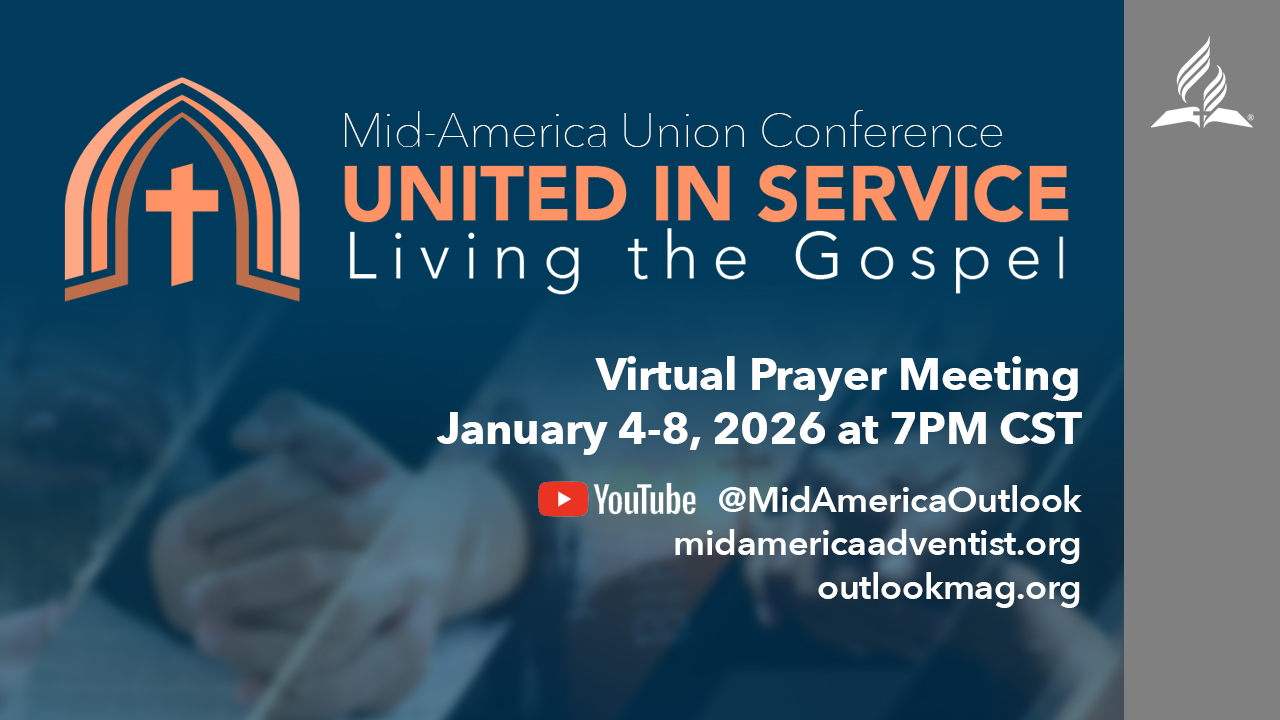 Virtual Week of Prayer Set for Jan. 4–8, 2026
– December 25, 2025
Virtual Week of Prayer Set for Jan. 4–8, 2026
– December 25, 2025
The Mid-America Union will begin 2026 with a Virtual Week of Prayer, held in partnership with Prayer Ministries. The Lord has carried us through many seasons, and though challenges remain—loss, time, employment, personal endeavors, and more—we continue to trust His guidance. At times, family values within the church can be overshadowed by competing priorities, but together we can renew our focus and strengthen one another in faith. Our theme for the week is “United in Service – Living the Gospel.” Join us January 4–8, 2026, at 7:00 p.m. for virtual meetings filled with prayer, music, and devotional messages shared by presenters from across the Union. Schedule of devotional speakers: Sunday, Jan. 4 – Pastor Tyrone Douglas – YouTube Monday, Jan. 5 – Pastor Liz Adams – YouTube Tuesday, Jan. 6 – Elder John Rockufeler Wednesday, Jan. 7 – Pastor Whitni Carlsen Thursday, Jan. 8 – Elder Richard Palmer Members are encouraged to subscribe to our YouTube and Facebook platforms and plan to watch and prepare for the week. Sunday, January 4, 2026 Monday, January 5, 2026 Join Tuesday, January 6, 2026 Join Wednesday, January 7, 2026 Join Thursday, January 8, 2026
Read more... West County Pathfinders Collect Food for Community Neighbors
– December 23, 2025
West County Pathfinders Collect Food for Community Neighbors
– December 23, 2025
On a sunny Sabbath afternoon in November, the West County Pioneers Pathfinder Club served their community by collecting bags of non-perishable food items from homes near the West County SDA Church. The effort followed a week of preparation. The Pathfinders, along with their leader, Jason Matthews, had delivered empty bags to each home in the surrounding neighborhood, inviting residents to help by filling them with food donations. After the collection was complete, all donated items were transported to the St. Louis Adventist Community Services Center. The food will be distributed to individuals and families in need of food assistance. The activity provided an opportunity for the Pathfinders to engage directly with their community while supporting a local service center that helps meet basic needs. by Darlene Moore
Read more...
Blogs
 The Teacher’s Notes–Reasons for Thanksgiving and Prayer, Lesson 2 Adult Bible Study Guide, 2026 1Q, "Uniting Heaven and Earth--Christ in Philippians and Colossians"
– January 3, 2026
The Teacher’s Notes–Reasons for Thanksgiving and Prayer, Lesson 2 Adult Bible Study Guide, 2026 1Q, "Uniting Heaven and Earth--Christ in Philippians and Colossians"
– January 3, 2026
Sabbath School Lesson for January 3-9, 2026 Introduction of Lesson 2, Reasons for Thanksgiving and Prayer Memory Text: “Being confident of this very thing, that He who has begun a good work in you will complete it until the day of Jesus Christ.” Philippians 1:6 NKJV Paul’s tender, fatherly greetings at the beginning of his letters are full of thankful, prayerful, encouraging words for his readers. One can feel the heartfelt emotion that pour from his pen, as he reminds them of the many ways God had blessed them, despite their current difficult circumstances and separation. Even angels only faintly comprehend the love, faith, and hope that Paul recommended to his friends, especially while he himself was suffering a dismal life in chained captivity. With positivity and grace, he patiently awaited a fate similar to that of God’s dear Son at the hands of the Roman power structure. Surely, we are blessed when we incorporate Paul’s praises of thanksgiving into our own times of devotional communication. No matter how dark and dismal our future appears to be, we, too, can take courage, knowing that God never leaves or forsakes us. Sunday: Fellowship in the Gospel Monday: Paul’s Prayer Requests Tuesday: Spiritual Discernment Applied Wednesday: Gospel Fruit Thursday: Prayer Power Sunday: Fellowship in the Gospel Paul begins his letter to the Philippians by listing several things he is thankful for concerning their fellowship in the gospel. He lets them know that he is praying for them daily and is confident that God will continue to work in their lives right up to the time when Jesus returns, “until the day of Jesus Christ” (Philippians 1:6). His reference to always having them in his heart (Philippians 1:7) reminds us of the twelve stones the high priest carried with him on his breastplate, a place close to his heart too. Just as the high priest made intercessory prayers for the Hebrew tribes, Paul carried the churches he planted on his heart, lifting them up to God at every opportunity. Amazingly, Paul indicated that he was thankful for his incarceration, which provided him with the opportunity to defend and confirm the gospel with the soldiers and others who visited him there in Rome. Verses and questions: Philippians 1:3-8 What were the things Paul was thankful for? What did he mean by saying their works would continue “until the day of Jesus Christ”? How were Paul’s comments reassuring to the church in Philippi? How do you feel when someone expresses care for and confidence in you? Is there anyone in particular you know who does this or who has done it in the past? Monday: Paul’s Prayer Requests In the first chapter of Philippians, Paul addressed some particular things he prayed for regarding the church as a whole. Notice he didn’t point fingers here at individuals. These are requests that pertain to all those with whom we have tender affection for. Briefly, Paul requested that they would have a correct understanding of love that would help them have a better knowledge of God and the discernment to serve Him properly. This discernment would allow them to recognize what is morally wrong, helping them live “pure and blameless” lives. Paul desired them to be sincere in their religious practice and not be a stumbling block, or an offense, to others. His final request was that they be filled with righteousness. Later, in chapter three, Paul goes into more detail about this righteousness. But, we do find a reminder in Philippians 1:11 that this righteousness is only available through their Lord and Savior, Jesus Christ. Verses and questions: Philippians 1:9 How does the way we love impact our knowledge of God and discernment of spiritual matters? Philippians 1:10 What does it mean to be sincere and without offense? How long will we struggle to maintain this sincere, inoffensive behavior? And why? Philippians 1:11 and Matthew 15:8 Who will having the fruits of righteousness help us become? Tuesday: Spiritual Discernment Applied Think about Paul’s circumstances in Rome. His house arrest meant that Paul could not travel, preach, visit, or raise up new churches. This extreme hindrance to his evangelism so worried the Philippians that they sent their brother, Epaphroditus, to visit Paul and try to encourage him (Philippians 4:18). After praying that their discernment be increased through their knowledge of the love of God, Paul indicated in his letter that he himself was receiving spiritual discernment as he discussed his fellow workers in the mission field. Paul noted that out of selfish ambition, some were taking advantage of his absence in their churches, and using it to further their own agendas and advance their positions. But there were others who were emboldened to preach in Paul’s place, noting his willingness to suffer for God’s cause. So, in many ways, through these sincere workers, his imprisonment caused the gospel to be preached more widely (Philippians 1:12). Knowing this must have been encouragement for the apostle. It even gave him the energy to share the gospel with Roman guards and any visitors who might be curious enough to come see him in his chains. His sphere of influence and missionary activities hadn’t diminished, they had just changed. Verses and questions: Philippians 1:12-18 What can we learn from Paul’s attitude about his circumstances and how it affected others? Why are there usually positive and negative outcomes to most of what we attempt to accomplish for God? How do you deal with those who may be working against you, either at work, in the family, or at church? Wednesday: Gospel Fruit How thoughtful it was of Paul to write to the church in Colossae. As he indicated in his letter’s greeting, he had “heard of” their faith, and was thankful for it. Paul was not directly responsible for the establishment of the Colossian church. It was Epaphras, one of Paul’s converts in Ephesus, who began the church in his hometown of Colossae, near Ephesus. Three gospel fruits are often mentioned in Paul’s letters. <a class="cat-post-excerpt-more" href="https://www.outlookmag.org/the-teachers-notes-reasons-for-thanksgiving-and-prayer-lesson-2/" title="Continue reading The Teacher’s Notes–Reasons for Thanksgiving and Prayer, Lesson 2 Adult Bible Study Guide, 2026 1Q, “Uniting Heaven and Earth–Christ in Philippians and Colossians”“>Read more…
Read more... Jump-Start Your Health In 2026 Healthy In 2026
– December 31, 2025
Jump-Start Your Health In 2026 Healthy In 2026
– December 31, 2025
https://youtube.com/shorts/7fU-6DjfGe0?feature=share
Read more... The Teacher’s Notes–Persecuted but Not Forsaken, Lesson 1 Adult Bible Study Guide, 2026 1Q, "Uniting Heaven and Earth--Christ in Philippians and Colossians"
– December 28, 2025
The Teacher’s Notes–Persecuted but Not Forsaken, Lesson 1 Adult Bible Study Guide, 2026 1Q, "Uniting Heaven and Earth--Christ in Philippians and Colossians"
– December 28, 2025
Sabbath School Lesson for December 27, 2005-January 2, 2026 Introduction of Lesson 1, Persecuted but Not Forsaken Memory Text: “Rejoice in the Lord always. Again, I say rejoice!” Philippians 4:4 NKJV Paul, who wrote both Colossians and Philippians from prison after suffering many hardships, seems like the last person who would tell us to be happy when we are unjustly suffering for our faith. Knowing from experience how difficult life can be, however, he repeats the simple advice to face our trials with thankful, joyful praise to God. He said it not once, but twice, as we read in Philippians 4:4. We are given a mental picture of what this rejoicing may have looked like for the apostle. When he and his coworker Silas were once jailed in Philippi, they used the quiet night time to sing hymns and pray, making their unfortunate situation there an opportunity to share their faith (Acts 16:25). Paul continued to find creative ways to make his prisons a mission field. He reached many fellow believers through the letters he was able to write or dictate during his times of uncomfortable, lonely imprisonment. His converts found needed strength and encouragement from the uplifting words they received from their beloved faith leader. Generations of believers have also benefited from Paul’s wise counsel in these letters. Sunday: Paul, the Prisoner of Jesus Christ Monday: Paul in Chains Tuesday: Paul in Philippi Wednesday: Paul and Colossae Thursday: The Churches of Philippi and Colossae Sunday: Paul, the Prisoner of Jesus Christ Paul identifies himself as a prisoner or bondservant of Jesus Christ (Ephesians 3:1 and Philemon 1). Also as “an ambassador in chains” (Ephesians 6:20). He didn’t want his readers to forget the circumstances of his imprisonment, or the One he was suffering for. Jesus, who promised His disciples that He would never leave or forsake them, was a constant companion who sustained Paul during the most difficult hardships he had to face. It is thought that the Prison Epistles (Philippians, Colossians, Ephesians, and Philemon) were written while Paul was incarcerated in Rome, about 60-62 A.D. In addition, 2 Timothy, called a Pastoral Epistle, was also thought to have been written while Paul was under arrest. In his letter to the Philippians, it is pretty apparent that he wrote to them from Rome. In Philippians 1:13, he mentioned the palace guard, and in Philippians 4:22, he mentioned saints who served in Caesar’s household. Paul, as we can imagine, made converts in whatever setting he found himself. He made the best out of whatever trial he was going through. Verses and questions: Ephesians 3:1, Philemon 1, and Romans 14:8 In what ways does our belonging to Christ make us His prisoners? Ephesians 6:20 How and for whom was Paul “an ambassador in chains”? Philippians 1:13 and 4:22 Why is it thought that Paul was in Rome when he wrote this epistle? Who may have been exposed to Paul’s preaching? Monday: Paul in Chains In defense of his ministry to the Macedonians in Greece, Paul recounts to the Corinthians the many hardships he was compelled to endure while serving God. One of them, of course, was imprisonments (2 Corinthians 6:5). Notice, he uses the plural. We know for sure that many times he found himself in jail for preaching the word of God. When we think of Paul later being under house arrest in Rome, however, we should be aware that it meant more than just not being able to leave his place of residence. With no technical way of tracking his movements such as we have today, he was compelled to be chained to a Roman soldier at all times. This was evident in Paul’s letter to Philemon when he mentioned being “in my chains” (Philemon 10, 13). Ignatius, a Christian living at the time, described these soldiers behaving like “wild beasts”. Such confinements wouldn’t have been easy for Paul. No matter how unbearable his lot though, Paul felt lifted up by knowing that God was very near, giving him the strength to get through his most difficult days. He explained how he drew spiritual power from the truths in God’s word and from the Holy Spirit. Verses and questions: 2 Corinthians 4:7-12 What did Paul have his hope centered on? How did this focus sustain him when times were hard, and when has it helped you personally? 2 Corinthians 6:3-7 What did Paul rely on to stay spiritually strong in these harsh trials? Why are both the Bible and the Spirit of God needed to sustain us? Tuesday: Paul in Philippi Paul was on his second missionary tour in Asia Minor with Silas, when he had a vision in the nighttime and was told to go to Macedonia in the northern part of Greece. The two evangelists followed this divine guidance and set sail across the Aegean Sea from the seaport city of Troas and landed in Philippi. Although they could have first gone to surrounding towns, Paul knew that Philippi was a very important city in Macedonia, enjoying a privileged status in the Roman Empire, as it essentially linked Rome with Asia Minor. Those born in Philippi were automatically considered Roman citizens. The official language in Philippi was, therefore, Latin, but many in the marketplace and those from adjoining towns spoke Greek. It was here that Paul and his fellow workers met for prayer by the riverside, and where Lydia, a wealthy businesswoman who sold expensive purple clothing, became their first European convert to Christianity. Although Philippi, so strategically located, seemed to be the perfect place from which to spread the gospel, it was obvious that persecution would eventually be noticed and dealt with harshly there as well. But, as often happened, this only contributed to more people becoming interested in hearing their message. Verses and questions: Acts 16:6-12 How does God sometimes divert our original plan and why is it important to listen to His signals, natural and supernatural, that may seem annoying at first and keep us <a class="cat-post-excerpt-more" href="https://www.outlookmag.org/the-teachers-notes-persecuted-but-not-forsaken-lesson-1/" title="Continue reading The Teacher’s Notes–Persecuted but Not Forsaken, Lesson 1 Adult Bible Study Guide, 2026 1Q, “Uniting Heaven and Earth–Christ in Philippians and Colossians”“>Read more…
Read more... Showing Up! Rain or Shine Offering comfort to those who grieve
– December 23, 2025
Showing Up! Rain or Shine Offering comfort to those who grieve
– December 23, 2025
Do the best you can until you know better. Then when you know better, do better. —Maya Angelou When three of Job’s friends heard of the tragedy he had suffered, they got together and traveled from their homes to comfort and console him. Their names were Eliphaz the Temanite, Bildad the Shuhite, and Zophar the Naamathite. When they saw Job from a distance, they scarcely recognized him. Wailing loudly, they tore their robes and threw dust into the air over their heads to show their grief. Then they sat on the ground with him for seven days and nights. No one said a word to Job, for they saw that his suffering was too great for words. —Job 2:11-13, NLT For seven days they did the best they could. Do you know someone who is suffering with heavy grief? You can piece together a few things to care for them by examining the good things that Job’s friends did for him. They showed up. They respected his feelings. They participated in his suffering. They kept their counsel in silence. They brought peace through presence. They showed respect by recognizing Job’s pain without using words. The value of understanding You can put these principles into practice in a number of ways. Let me tell you how I might practice care with the grieving. I would start by looking at the type of grieving they might be experiencing. Was a child stillborn and the mother seems despondent and hopeless? Did an older mother lose her 30 year old son to a heart illness or a drug overdose? Did a husband lie in bed with his wife as she took her last breaths, dying from cancer? These all have slightly different kinds of grief attached to them. And they may require slightly different care. The stillborn child will never live to shine in this world. The son that dies too early may leave the mother or father bewildered as to why he was not permitted to continue in this life. The husband who loses his wife has lost a great companion and friend as well as lover and respecter of his heart. Knowing these differences does not make it easier for you to cure their grief. No one can do that really. But it might make it easier to understand their grief. To be sure, you can never really feel what someone else feels and it is often unwise to say, “I know how you’re feeling,” because you probably don’t. I think the best thing your understanding can do for you is to help YOU feel less anxious about the care you provide and in turn help you to be a better caregiver. Practical ways to offer comfort I wasn’t sure what I was going to do or say when I entered into hospice chaplaincy. I was a bit nervous actually. I soon discovered the value of presence, music, Scripture, especially the Psalms that the grieving can identify with, even well timed and well placed humor. I had to be extra careful with humor for obvious reasons and sometimes humor was completely out of place. I had one patient though that would prepare for my visits by practicing a joke on his wife and tell it to me when I showed up. And then I would have to tell him a joke in return. In fact, he told me that I would only be allowed to tell funny stories and jokes at his funeral. I told three funny stories as he demanded and it made for the most memorable celebration. Just be extra careful with humor— almost never start a conversation trying to be funny or clever, but keep your eye out for signs that it may be useful at some point. I took all these things and put them into my chaplain’s tool box, you might say. A small Bible with well chosen passages, a harmonica that could play over a 100 hymns that were as comforting as Scripture to many older church goers, a collection of poems and a few small, short books or booklets and some aspect of loss and hope. Perhaps I’ll outline those in another post, but for now, it might be better if you find your own and learn how to use them as Maya Angelou suggested, doing the best you can and then learning to do better. Two texts to share as we finish up this year, The 23rd Psalm and Philippians 3:20, 21. I would pick up the book A Shepherd Looks At Psalm 23 by Phillip Keller. Read that two or three times and let the 23rd Psalm become your constant companion and you will never run out of encouragement for the grieving. Then spend some time in Paul’s magnificent chapter on hope in Philippians 3 and you will be much wiser in God’s plan for our forever friendship with Him.
Read more...
Featured Stories
 Why I Return My Tithe
– January 5, 2026
Why I Return My Tithe
– January 5, 2026
In Sabbath school we were recently discussing why we tithe. One person said, “Because I trust God.” Another said, “Because the Bible tells us to.” Both are good answers, but I believe there’s more to it. Let me share why I return a tithe—rather than pay one. Scripture mentions tithing in both the Old and New Testaments, clearly defining it as 10 percent of our earnings. From childhood I was taught to return that first 10 percent to God—not what’s left after paying bills. As a little girl earning a dollar a week for chores, I dropped four dimes into my tithe envelope each month. I didn’t fully understand it then, but it was a good habit to learn: putting God first. In college I continued the practice, and God blessed my faithfulness. Once, my dorm neighbor was a few hundred dollars short of her school bill and feared she’d have to leave. After praying, I felt impressed to go door-to-door asking students to give whatever they could or to pray for her if they couldn’t. When I finished collecting, I counted the money—it was $15 more than she needed! The next day she learned her bill was actually $15 higher because of an office error. The “extra” amount covered it exactly. We cried tears of joy and praised God for His perfect provision. After graduation I moved into an apartment and began job hunting. I eventually found part-time work in food service, but money was tight. That first winter I often cried into my pillow, begging God for help. Simple things like cheese or sweets were luxuries I couldn’t afford. Once a month I treated myself to a $6 Subway sandwich, splitting it into two meals just for the morale boost. Then, in the bitter cold of February, someone anonymously gave me a $50 Walmart gift card. It was enough to buy groceries for the rest of the month and beyond. I cried happy tears again—God had heard my prayers. When I married, I assumed finances would become easier with two incomes. Instead, I discovered my husband carried a mountain of hidden debt. I created a repayment plan and kept returning tithe. Two or three years later, while reviewing our finances, I realized our account balance was $200 higher than it should have been. We double-checked everything—no mistakes. That’s when it hit me: God had been sustaining us without our even realizing it. “Before they call I will answer; while they are yet speaking, I will hear” (Isaiah 65:24). God had literally balanced our books. Years later I became divorced and went on disability for lung disease, but God still provides. His blessings now come in different forms: my parents helping with legal fees, government assistance that lowers medical costs, babysitting or pet-sitting jobs that bring in a little extra, and even anonymous financial gifts. Once, He even made my car’s check-engine light turn off—and stay off! So why do I tithe? As a child, I did it because I was taught to obey God. As a young adult, it became an act of faith that built trust. Now, it’s about gratitude. I don’t ever want to know what life would be like if I didn’t trust God with my finances. I’ve seen too many miracles to doubt Him now. When I think about it, keeping that 10 percent for myself would never make me richer. Like the boy who gave Jesus his small lunch of loaves and fishes, I’d rather place my small portion in the hands of the One who multiplies it. That’s also why I prefer the phrase returning tithe instead of paying tithe. Everything I have—my job, my home, my car, my food—comes from God to begin with. How could I ever “pay” Him back? I can only return a small part of what He’s entrusted to me. It’s like when you give a child a bag of Goldfish crackers and they offer you back two tiny ones. They’re returning a little of what you gave them, not paying you for it. God delights in that kind of trust. He doesn’t need our money; He wants our faith. Every time I fill out a tithe envelope, I’m reminded that He has always been faithful—and He always will be. Anna Balsanek is a member of Piedmont Park Church in Lincoln, Nebraska.
Read more... I Will Ever Praise You 1st Place Winnner of the OUTLOOK Student Essay Contest
– December 31, 2025
I Will Ever Praise You 1st Place Winnner of the OUTLOOK Student Essay Contest
– December 31, 2025
Since second grade, I have attended school on the same campus, gone to Sabbath school at the same church, and taken all the Bible classes offered through my Adventist school. My mom is a K-2 teacher in the Rocky Mountain Conference, resulting in a life dominated by Adventist education. However, since I grew up in the church, it was hard to feel as if I truly owned my faith. I had teachers who would start classes off with a devotional and pray, but I never felt firm in my faith in God. This all changed my junior year of high school. That summer, my life was turned upside down. My parents were getting a divorce and my faith in Jesus had hit the rocks. I was struggling mentally, socially, spiritually, and physically. In Adventist education, we are gifted with the opportunity to take challenging and even dual-credit classes, participate in sports teams, join music groups, and take on student leadership roles. These aspects of Adventist education are supposed to help students grow individually. But when I needed it most, it felt too overbearing. I had taken on too much responsibility, leading myself in a spiral of failure, doubt, and avoidance. I had grown farther and farther from God. On Friday night during a leadership weekend at Campion Academy, I was struck with the feeling that I couldn’t come out of this alone. I knelt before God and prayed even though my heart wasn’t fully committed. He impressed upon me the memory of what my Bible teacher, Chaplain Lindsey Santana, had said about God: “When you don’t know what to do, open your Bible. God will tell you what you need to hear.” I wanted to avoid what I needed to do in order to escape this rut. I tried my own way of thinking, thought out any other plan in my mind, but nothing came. The only thing that was firm, constant, and loyal was God and His promises. So, at rock bottom on a dark, starry night, I opened my Bible up at random to Psalm 71:5-6. “For you have been my hope, Sovereign Lord, my confidence since my youth. From birth I have relied on you; you brought me forth from my mother’s womb. I will ever praise you.” That night, I went home crying and praising with joy. I had the reassurance that even though this tsunami felt like it was destroying me, God would still be my lifeboat. Psalm 71 became my favorite chapter in the Bible, and for the rest of my junior year, I relied on it when I needed encouragement. At the end of the school year, I decided to apply as student chaplain for Campion, and I got the job. All summer leading up to my senior year, I felt as if I wasn’t good enough to lead the school in the position of student chaplain. As I turned to Psalm 71:7-8, I realized that this is God’s plan and there is no fault in it. “I have become a sign to many; you are my strong refuge. My mouth is filled with your praise, declaring your splendor all day long.” My senior year has brought many different kinds of mountains and valleys. Each morning, I ask God to work through me, in order for every person I encounter to see Jesus. Chaplain Santana has helped me grow in my faith by encouraging me with Bible verses and through her Sabbath school messages. She cheers me on and lifts me up spiritually. Whenever I’m in need of a pick me up snack, hug or a prayer, she is there for me. I thank God each day for blessing me with Chaplain Santana and for the opportunity to attend Adventist education. As I move from Campion to college, and other opportunities this life has to offer, I will remember the lessons this place has taught me: to have courage and know that God has a plan for everything. But more than anything, I will remember that my faith can’t be inherited; it has to be chosen. For years I knew of God, but I didn’t know God. My faith and relationship with Him became real when I stopped trying to live this life on my own and began to rely on Him completely. The same God who guided me at rock bottom continues to guide me each day, and wherever life takes me, I will ever praise Him. Evie Lange is 1st place winner of the 2025 OUTLOOK Student Writers Contest.
Read more... Worship: What it is and Isn’t and Why it Matters
– December 16, 2025
Worship: What it is and Isn’t and Why it Matters
– December 16, 2025
Most of us picture Jesus as gentle—healing the sick, blessing children, speaking words of comfort. But there is one moment in His ministry when His love looked like fire: when He walked into the temple, stopped, and said, “My house is the house of prayer, but ye have made it a den of thieves.” (Luke 19:46) The temple was supposed to be the center of worship. Instead, it had become a marketplace of exploitation, distraction, and noise. Jesus didn’t simply correct a problem. He confronted a false system of worship that was suffocating true devotion. And it’s not just a story from the past. The Bible says this moment is a preview of the final conflict over worship (Revelation 13–18). When Worship Becomes Transactional Instead of Transformational In Jesus’ day, priests and merchants created a system where forgiveness cost money, spirituality could be purchased, and the poor were pushed aside. The problem wasn’t the temple—it was the spirit controlling it. Anytime religion becomes: A performance instead of prayer A business instead of a blessing A tradition instead of a living relationship with God …it becomes what Jesus called a “den of thieves.” A place where the heart is robbed instead of restored. Even sincere believers can lose their way when worship drifts into noise, routine, or self-focus. The Real Issue Behind the Temple Cleansing Jesus did not cleanse the temple to simply remove animals or moneychangers. He cleansed it because the purpose of worship had been lost. Worship is meant to: Reveal the character of God Restore broken hearts Connect us to His presence Point us to His mission in the world When worship loses these elements, it becomes hollow—even if the outward forms look religious. This same issue appears again in Revelation, where two systems of worship emerge: One centered on the Lamb (Revelation 14:1–7) and one centered on human authority, pressure, and deception (Revelation 13:15–17). The conflict is not primarily political. It’s spiritual. It’s about who shapes your heart. A Cleansing That Starts With Us What Jesus did in the temple, He wants to do in every believer. Ellen White describes this perfectly: “The work of Christ in cleansing the temple is a lesson for us. He has a work to do in clearing out the temple of the soul from the defilement of sin.” — Review and Herald, Feb. 7, 1899 This is not condemnation—it’s invitation. Jesus does not cleanse to shame us. He cleanses to free us. He cleanses because He loves us too much to leave us unchanged. We sometimes fear His cleansing because we think it will be painful. But Jesus removes only what harms, distracts, or enslaves. He restores what gives life. Why This Matters for the End Times Revelation says the last great issue is worship: “Fear God… worship Him that made heaven, and earth.” — Revelation 14:7 This is the same message Jesus gave in the temple, but on a global scale. End-time worship is not about: Rituals Buildings Cultural Christianity Tradition It’s about loyalty, love, and truth. It’s about allowing Jesus full access to our hearts. It’s about choosing the Lamb over the noise. The world is moving toward a worship crisis where deception, pressure, and confusion will increase. But Jesus is forming a people who worship “in spirit and in truth”—people who are not swept away by appearances, feelings, or pressure. A Hopeful Conclusion The story of Jesus cleansing the temple is not just a warning—it’s a promise. It tells us that Jesus sees every distortion of worship… and He cares enough to step in. It tells us that God is more committed to our spiritual freedom than we are. And it reminds us that before the final events unfold, Jesus is cleansing hearts today—gently removing whatever keeps us from experiencing His presence, His peace, and His power. True worship isn’t noisy. It isn’t complicated. It isn’t for sale. It’s simply this: A life open to the presence of God. R Scott Holder
Read more...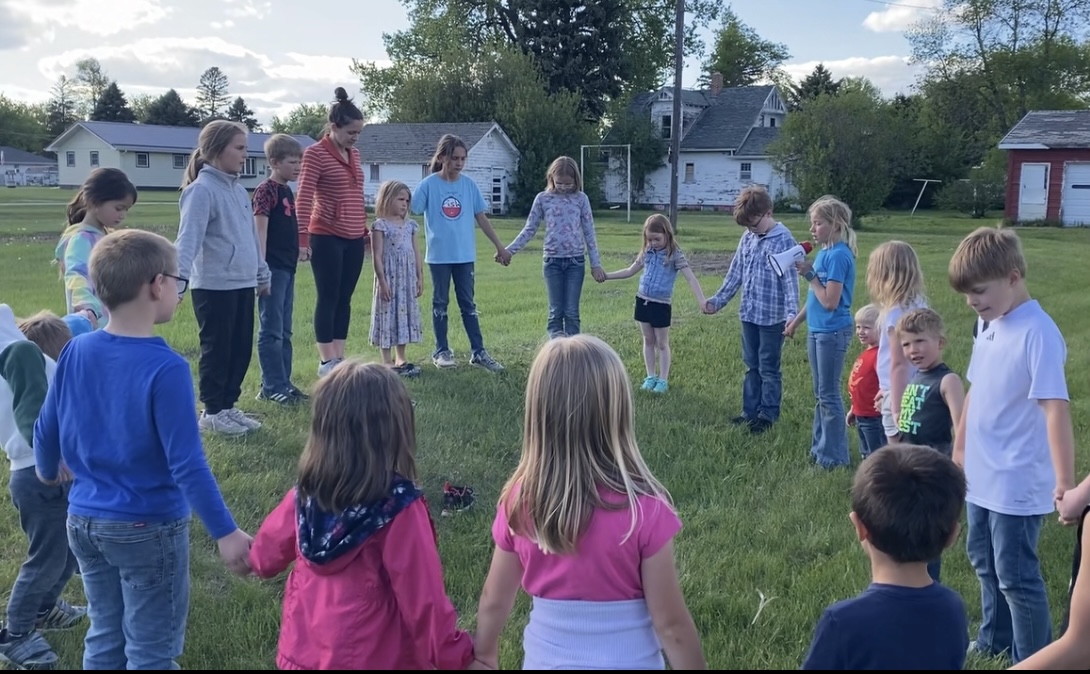 Little Lights Shine Bright in Bowdle
– December 15, 2025
Little Lights Shine Bright in Bowdle
– December 15, 2025
It all started with a desire among members of the Bowdle Adventist Church in South Dakota to begin an outreach in their community—a place where parents could have a few hours to themselves while volunteers shared Jesus’ love with their children. The church decided to hold the event on the third Thursday of each month for three hours, from 5:00 to 8:00 p.m. Over time, Kids’ Night grew in both age and number—from about a dozen young children to nearly 40 participants, ranging in age from three to 13. This growth has been a blessing, though it also meant adding more structure, planning additional activities, and making the most of the church’s space, especially during the winter months. Each month brings something new. Much of the time, the theme follows the season or holiday of that month. In winter, the group celebrates the birth of Jesus and enjoys outdoor fun in the snow. Spring reminds them of God’s love through Jesus’ death on the cross. Summer brings sunshine, water and joy as they celebrate God’s presence in their lives. Fall fills hearts with gratitude for what God has done and brings the fun of a fall festival. One of the most memorable gatherings took place last winter when the group split up the boys and girls. The girls enjoyed a special night of nails, foot spa, games and glam while learning about women of faith in the Bible. Each evening begins with a group activity where everyone joins in for fun and laughter. After that, the children move into exercise time with “animal exercises” like jumping-jack starfishes, jumping frogs, bear crawls, and more. Then all the children come together to pray in a circle—one of the organizers’ favorite moments of the night, as it has encouraged some of the children to pray heartfelt prayers for the very first time. Following prayer, the group enjoys a wonderful (and often very loud!) mealtime. After supper, the children are usually divided into two groups: the younger ones (pre-K through first grade) and the older ones (second grade and up). During this time, they sing songs, hear a Bible story, and the younger children also complete a craft project. To close the evening, everyone joins together for glow sticks and to sing This Little Light of Mine—a reminder to shine the light of Jesus throughout the coming month and to keep shining until He comes again to take us home. The church family continues to see many blessings through this ministry. None of it would be possible without the dedicated volunteers, faithful prayers, and hard work poured into each evening. Members ask for prayers that Kids’ Night will keep growing and sharing Jesus’ love with children, helping shape their hearts for Him. They also hope this ministry inspires others to reach out to the children in their own communities and find ways to share Jesus’ love with them every day. “But Jesus called the children to him and said, ‘Let the little children come to me, and do not hinder them, for the kingdom of God belongs to such as these’” (Luke 18:16, NIV). Sarah Heinrich serves as the children’s ministries director at the Bowdle Adventist Church. She and her husband, Josh, along with their two children, are active in church life.
Read more...